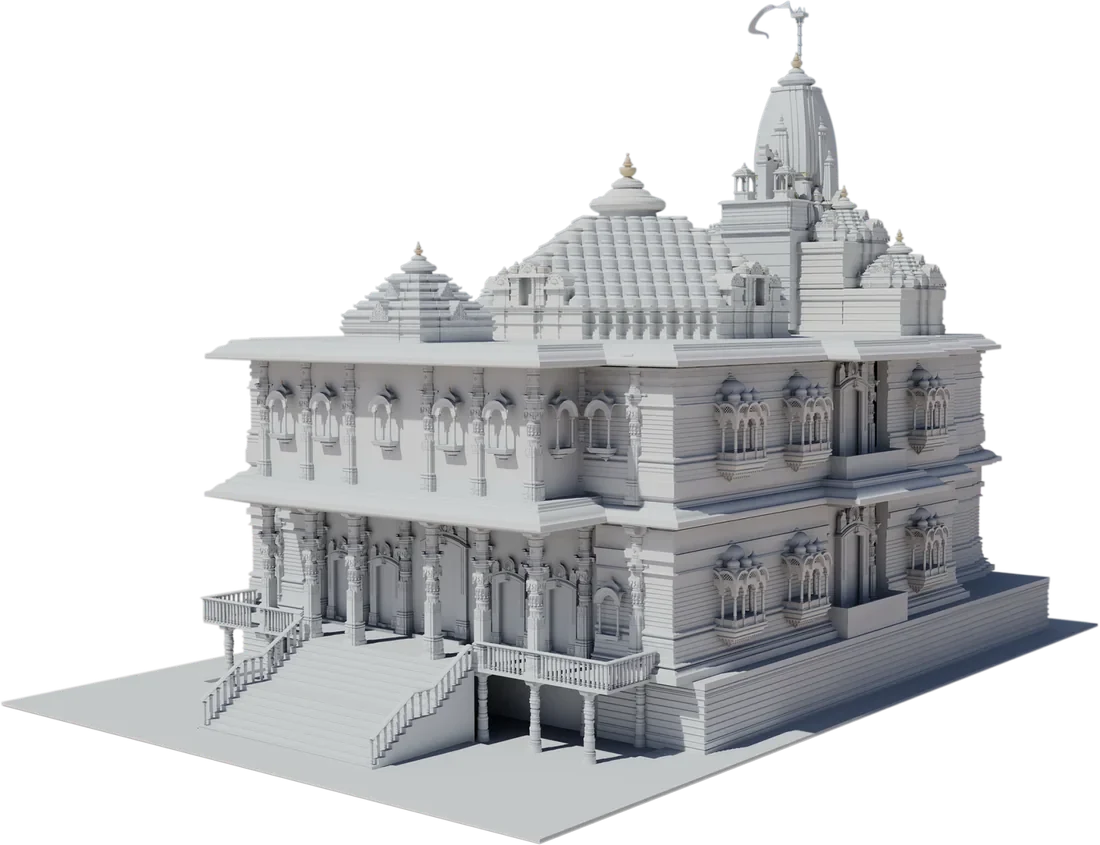
Shri Adinath Jain
Shwetambar Mandir
Bangalore ke Raja… Chickpet ke Dada.
Est. 1920 · 106+ years · Chickpet, Bengaluru
Darshan
6:00 AM – 1:00 PM
4:30 PM – 8:30 PM (darshan only)
Tradition
Jain · Shwetambar
Location
Chickpet, Bengaluru

100 Years — Aadi Shatabdi Mahotsav
Celebrating the Aadi Shatabdi Mahotsav — 100+ years of Chickpet ki Aastha, since 1920.
0+
Years of Devotion
2 February 1920
Vikram Samvat 1976, Magh Sudi 13
~2,200 years old
Age of the moolnayak murti
Our Story
What began as devotion gathered in a small home shrine has, for over a century, stood in Chickpet as a home for the heart.
Jain families settled in Bengaluru first built a modest Ghar Mandir to continue their worship of the Paramatma, installing a small murti of Shri Parshvanath Bhagwan — still enshrined today as Chintamani Parshvanath on the upper floor. As their numbers grew, so did a shared dream: to raise a grand Jin Mandir the whole community could call home.
The Legend of the Idols
Around 1919, with no Jinalaya anywhere near the city, four or five devoted shravaks set out from Bengaluru by bullock cart for Rajasthan, hoping to bring back idols worthy of a new temple. There was no map to follow — no telephone, no certainty of where they might succeed — only faith, and the names of villages people mentioned along the way.
The search led them to the village of Chhota Poshina, where a quiet Bhil tribesman approached and asked what they were looking for. When they explained, he simply said, "Come with me," and led them into an old, hall-like dwelling. Inside stood five murtis, arranged exactly as they are worshipped today: Shri Adinath Bhagwan at the centre, flanked on either side by two forms of Shri Parshvanath Bhagwan, with Shri Shantinath beside one and Shri Mahaveer Swami beside the other.
"Take them with you," the man said. When the devotees turned to thank him, he was gone. They searched for three days, asking everyone in the village, hoping to find him and pay for the murtis — but he was never seen again. Reading it as a divine sign, they carried the five idols back to Bengaluru, where they were consecrated with great celebration on 2 February 1920 (Vikram Samvat 1976, Magh Sudi 13), under the guidance of Yativarya Shri Mahendrasuriji, with a ten-day (dashahnika) mahotsav.
Years later, several acharya bhagwants who examined the murtis' carving and iconography concluded they belong to the Samprati era — nearly 2,200 years old. An idol untouched by two millennia, worshipped without interruption, now stands in the heart of Bengaluru.
Building Against the Odds
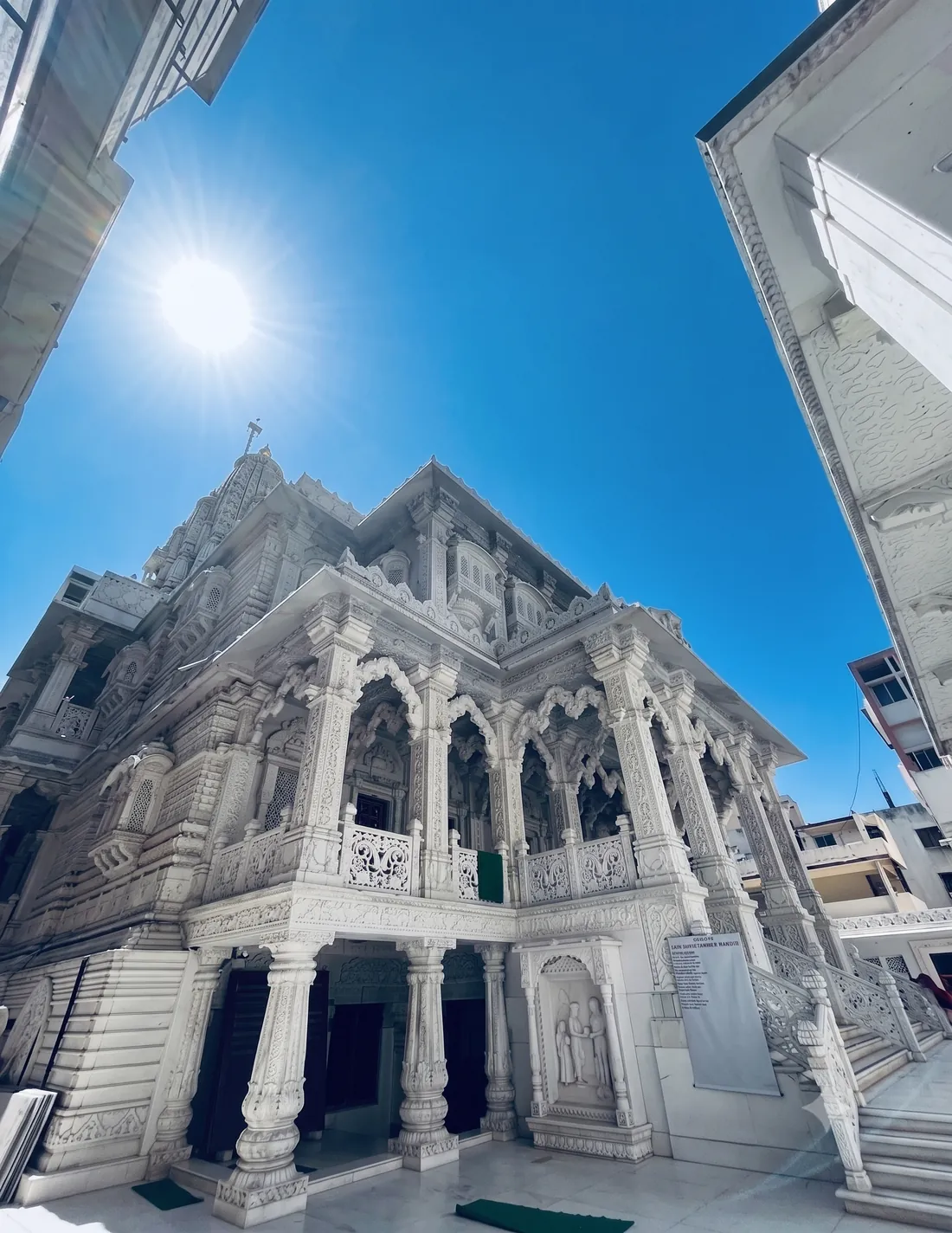
Turning that discovery into a temple was its own trial. Shreshthivarya Chamanmalji Dungaji of Ahore, Rajasthan led the effort, and despite a small and modest Jain population in the city at the time, the wider community gave what it could in time, effort, and means. Local opposition to the construction was real — obstacles were even raised by the authorities during the building of the shikhar — but the sangh's elders met it with patience and resolve. A richly crafted temple, its stonework carved in fine detail, rose in Chickpet.
The current two-storied temple you see today was rebuilt on this foundation: the shilanyas (foundation stone) was laid on 14 July 2000, and the anjanshalaka pratishtha of the new, grand Jinalay was completed on 30 November 2011, in the presence of numerous acharya bhagwants and sadhu-sadhviji bhagwants. It is built in the Solanki style, faced in Makrana marble — the same stone that has carried Jain devotion across Rajasthan and Gujarat for centuries, now standing in the heart of Bengaluru.
With Their Blessings
Guru Parampara
The 1920 consecration of the moolnayak was carried out under the guidance of Yativarya Shri Mahendrasuriji. Nearly a century later, the anjanshalaka pratishtha of the present grand temple, in 2011, was blessed by the presence of numerous acharya bhagwants and sadhu-sadhviji bhagwants of the Jain Shwetambar tradition.
Yativarya Shri Mahendrasuriji
Acharya Shri Ashokratnasuriji
Acharya Shri Amarsensuriji
Acharya Shri Rajyashsuriji
A Century in Numbers
The Sangh's Legacy
Chickpet Shrisangh was, for decades, the only home of Jain worship and learning in Bengaluru — a legacy that still shapes the city's Jain community today.
0
Years as Bengaluru's only Jinalay
0+
Books in Karnataka's largest Jain gyaan bhandar
0+
Students in the sangh's pathshala today
0+
Dikshas taken by members of this sangh
Three Floors, Three Tirthankaras
The Deities of the Mandir
Each floor of the temple holds its own presiding Tirthankara, each in the sacred lineage of a great pilgrimage — a vertical journey from foundation to spire.
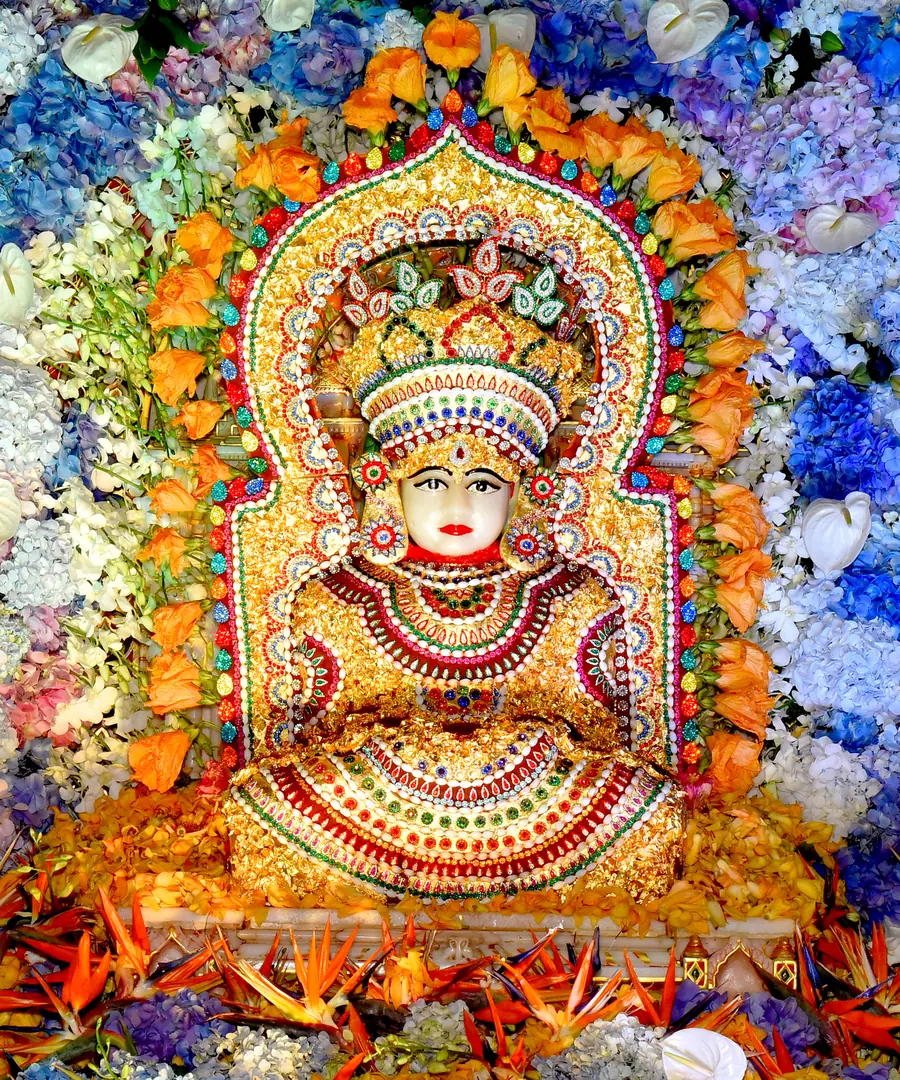
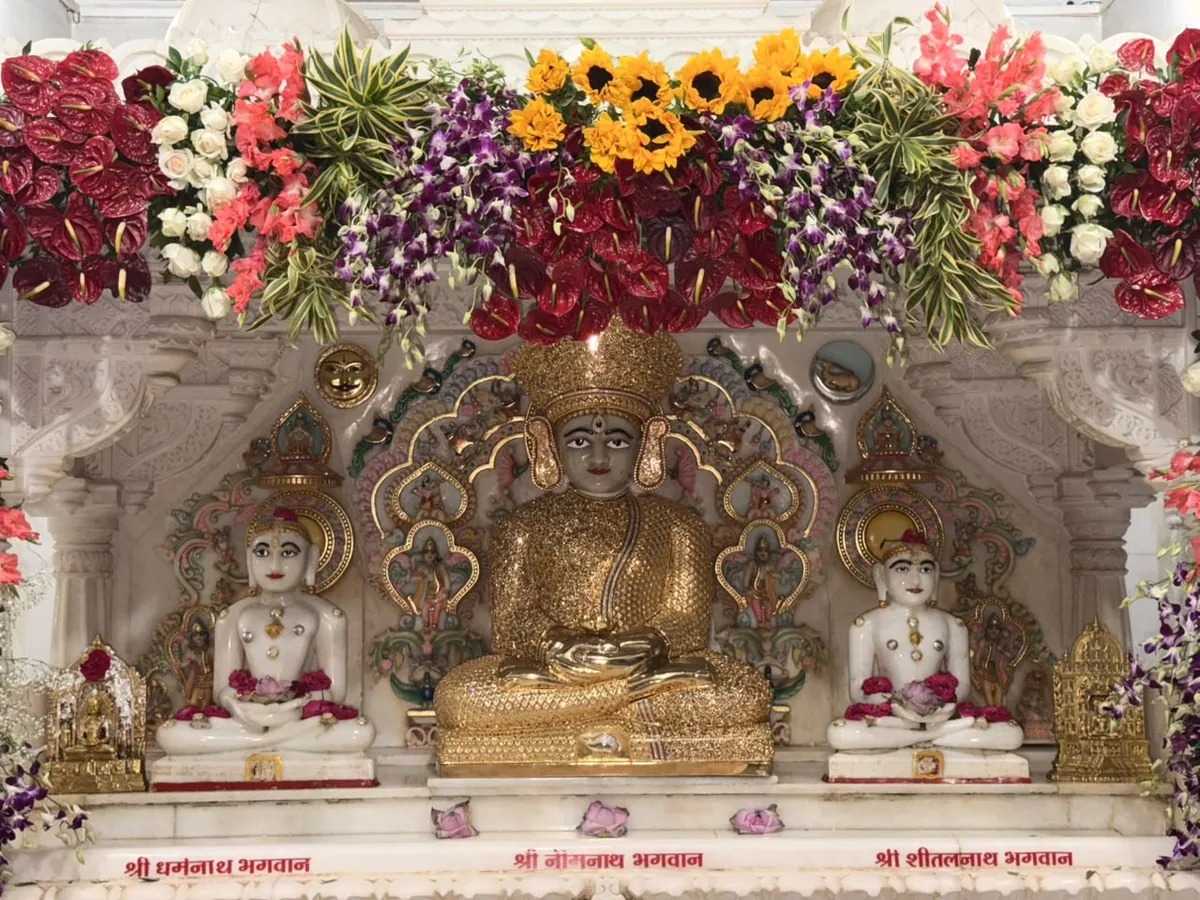
Ground Floor · Mool Nayak
Shri Rishabh Dev Bhagwan
In the lineage of Shri Siddhachal (Shatrunjaya)
Emblem — Bull (Vrishabha) · ~2,200 years old
Basement
Shri Neminath Bhagwan
In the lineage of Shri Girnarji
Emblem — Conch (Shankha)
The only moolnayak Neminath Bhagwan in Bengaluru
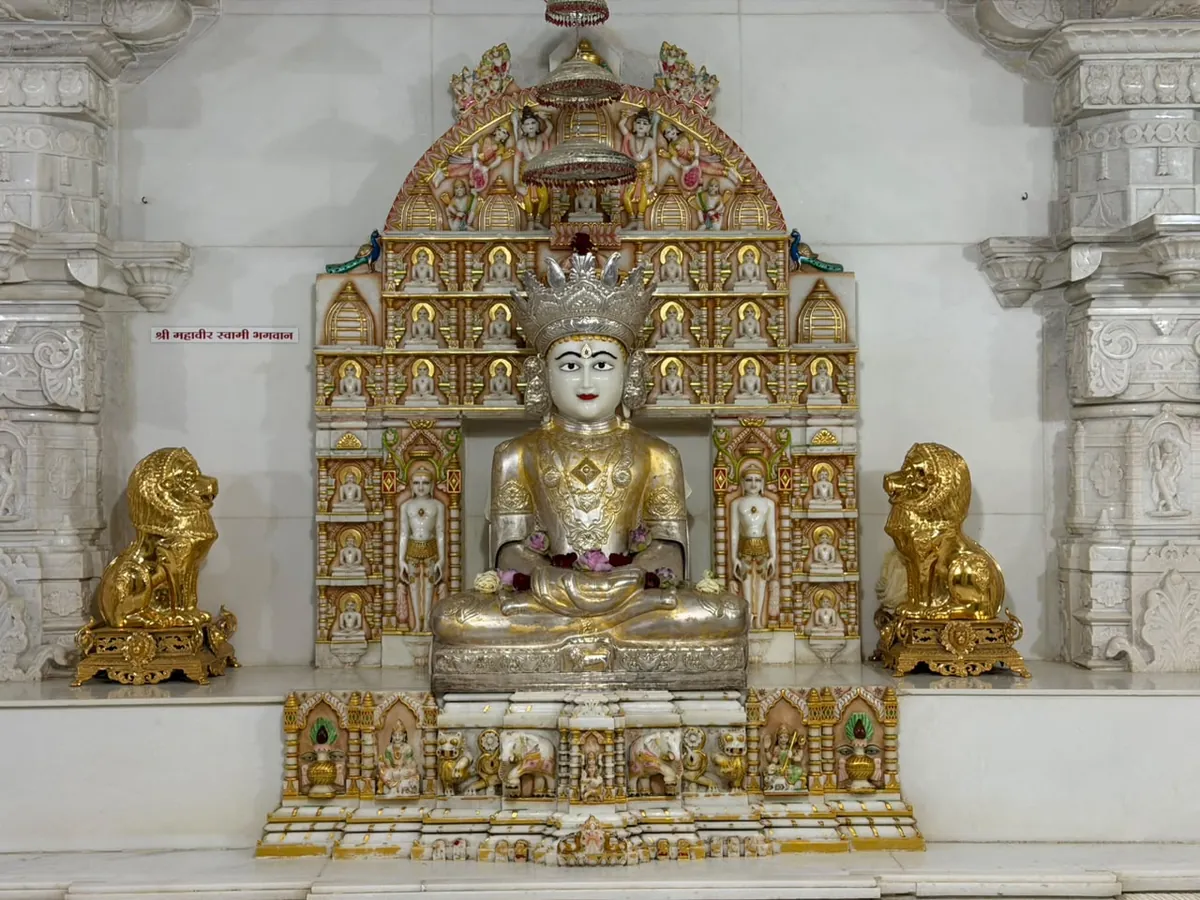
First Floor
Shri Mahaveer Swamy Bhagwan
In the lineage of Shri Pawapuri
Emblem — Lion (Simha)
A Living Sangh
Sangh Activities
Beyond darshan, the sangh runs regular activities that carry the community's learning and practice forward.
Shri Vijay Labdhi Suri Jain Dharmik Pathshala
Regular classes carrying Jain teachings, prayers, and values to the sangh's children and youth.

Sandhya Bhakti
Evening gatherings of devotional singing and bhakti in the presence of Bhagwan.
Sri Rishabn Sanskar Vatika
Programs shaping character and values in the sangh's younger generation.
Arham Group
A community for the sangh's young adults to connect, serve, and grow together.
Glimpses
Inside the Sanctum
The moolnayak, adorned through the year in different ang-rachna — the temple's daily and festival ornamentation.
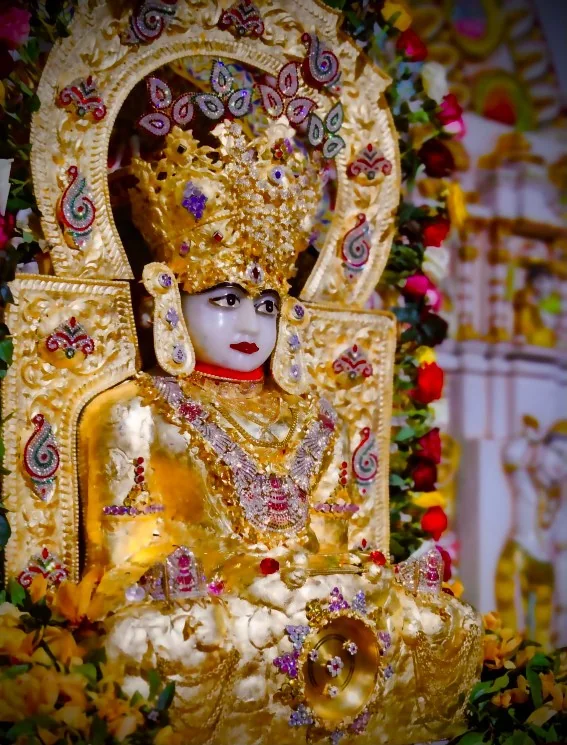
Golden Ang-Rachna
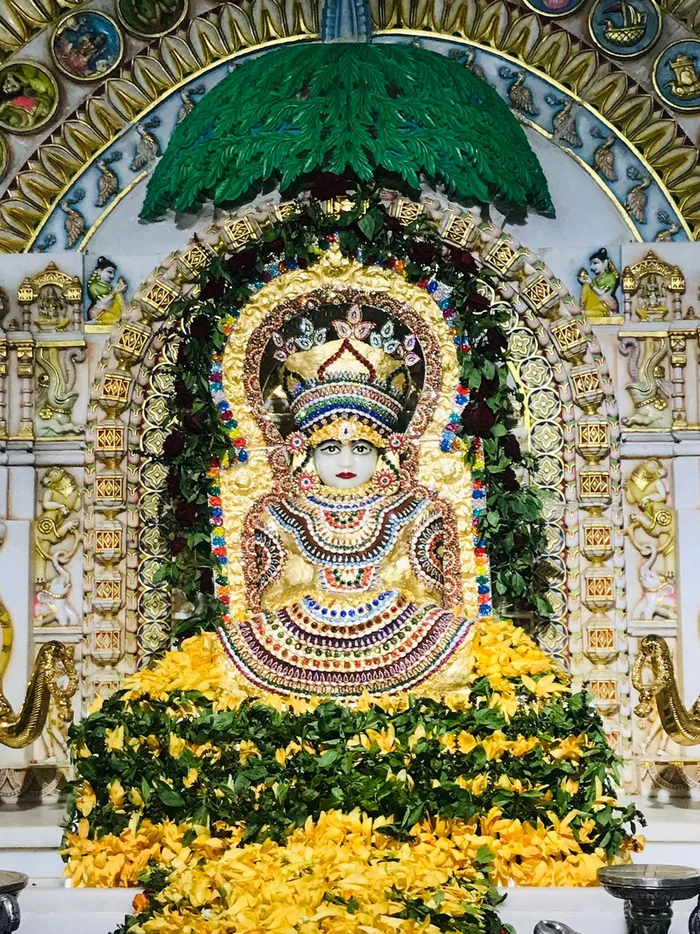
Floral Canopy
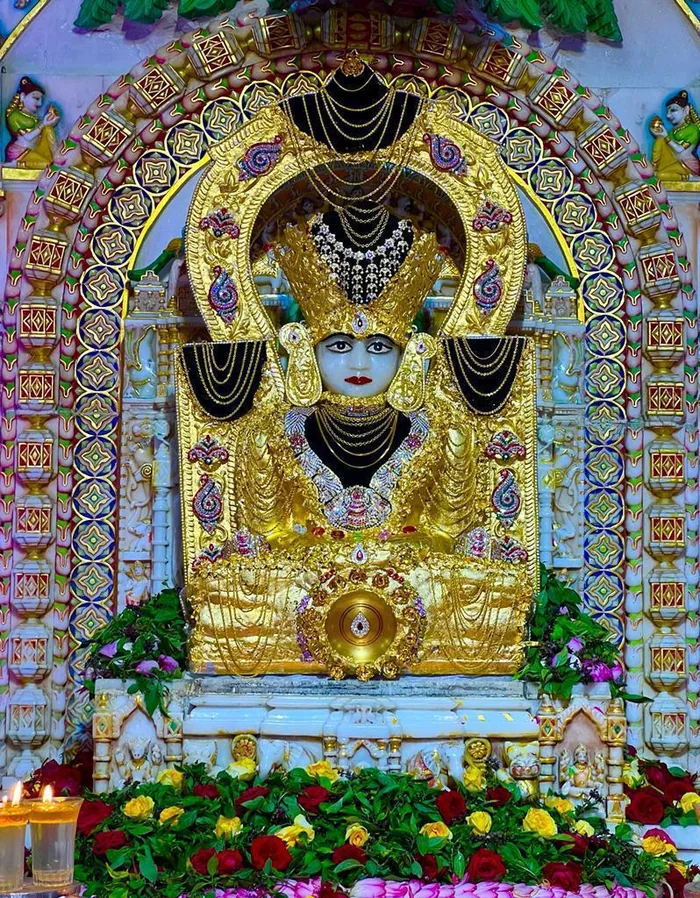
Rose Garlands
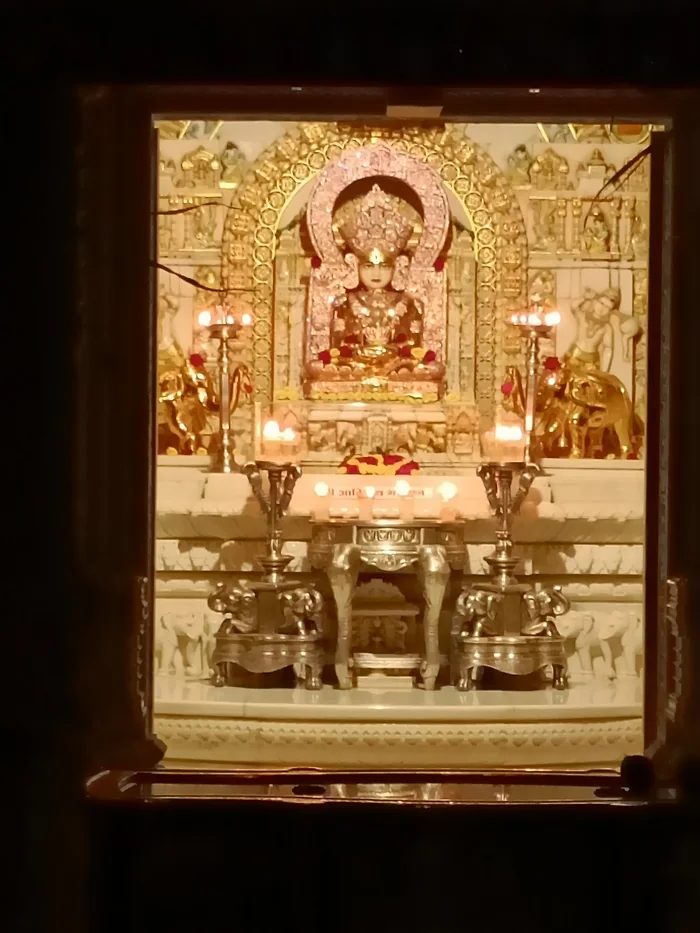
Evening Aarti
Darshan Hours
Temple Timings
Morning
6:00 AM – 1:00 PM
Open for darshan and puja
Evening
4:30 PM – 8:30 PM
Darshan only — no puja in the evening
Visitor Timings — 12:00 PM – 1:00 PM & 4:30 PM – 8:00 PM
For non-practicing visitors. Festivals & events to be announced — follow our social pages for updates.
Today's Pachakhan Times
Sunrise
…
Navkarshi
…
Porisi
…
Sadh Porisi
…
Purimaddha
…
Avadh
…
Tivihar
…
Chauvihar (Sunset)
…
Sunset
…
Calculated for today's date at the temple's location, following the Shwetamber (SVM) convention. Some sanghs follow slightly different local conventions — please confirm with the temple for guidance on your personal pachakhan.
New Here?
Visiting for the First Time?
Everyone is welcome at the mandir. A few things to know before you come.
Remove Footwear
Leave shoes and slippers at the entrance racks before stepping in.
Dress Modestly
Covered shoulders and knees are appreciated. Clean, simple attire is customary before darshan.
Ask Before Photos
Photography near the sanctum may be restricted. Please check with the temple staff on duty.
Ask a Volunteer
First time here? Sangh volunteers at the entrance are happy to guide you through darshan.
In Their Words
What Visitors Say
"The sanctum has such a calm, grounding energy. The carving on the ceiling alone is worth a slow, quiet visit."
Priya Shah
Bengaluru
"We were visiting from out of town and the sangh made us feel completely at home — someone even walked us through the darshan timings personally."
Kiran Mehta
Mumbai
"It was my daughter's first visit to a Jain temple, and the volunteers were so patient explaining everything to her. She hasn't stopped talking about the murti since."
Anita Sanghvi
Chennai
Good to Know
Frequently Asked Questions
What are the darshan timings?
The temple is open for darshan and puja from 6:00 AM to 1:00 PM, and for darshan only from 4:30 PM to 8:30 PM.
Do I need to register before visiting?
Is there a dress code?
How do I reach the temple?
Can I take photographs inside?
Find Us
Visiting the Mandir
How to Reach
- KSR Bengaluru Railway Station
- Chickpete Metro Station
- Mysore Bank Circle Bus Stop or KR Market (City Market) Bus Stand
Get in Touch
Contact the Mandir
Trust
Shri Adinath Jain Shwetambar Mandir, Chickpet
+91-80-4114 0142
Send Us a Message
We'll get back to you at the earliest.